Memory substrate · Current
Personal Brain
Local-first memory for an AI that actually knows its operator. The model is rented intelligence; the memory is owned, and the memory is the moat.
The problem it exists to solve
Every AI assistant has the same flaw: it forgets you. Each session starts from zero, the same context gets re-explained, and the relationship never compounds. The fix is not a smarter model. It is a memory the model can stand on, structured well enough that recall holds up months later, and owned outright so no platform can take it hostage.
Personal Brain is that memory. It is the substrate underneath everything else I build: the vault that the Observatory operates, the structure the SKF paper formalizes, and the reason my AI knows on Tuesday what we decided in March.
How it remembers
Memory is treated as a full lifecycle, not a transcript dump. Four stages, each with its own discipline:
Everything worth keeping lands as plain text, fast and frictionless.
Typed files with stable IDs: decisions, lessons, processes, not one big pile.
Knowledge ages. Stale context is found and reconciled before it misleads.
Retrieval tuned so the right memory surfaces at the moment of use.
The structure itself follows a containment model: every piece of knowledge has exactly one home, indexes are maps rather than owners, and the whole sphere has a boundary that I control. That boundary thinking is what grew into the Sovereign Knowledge Federation paper.
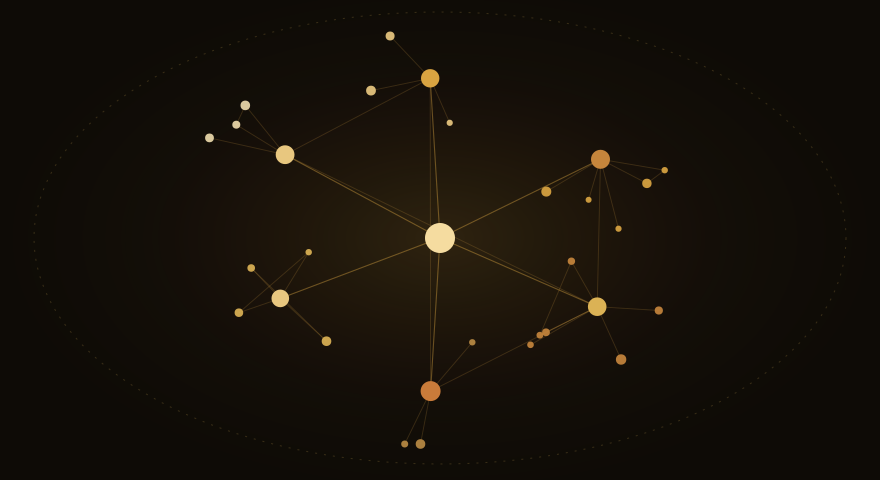
The shape of it: one sovereign sphere, structured inside, a guarded bridge to anything outside.
Why local
The models run on my own hardware at home. That is not nostalgia or paranoia; it is the only arrangement where the memory of my life and work answers to me alone. Cloud models can be swapped in for raw horsepower when a task deserves it, but the memory itself never leaves the building. Rent the intelligence when it helps. Own the memory always.